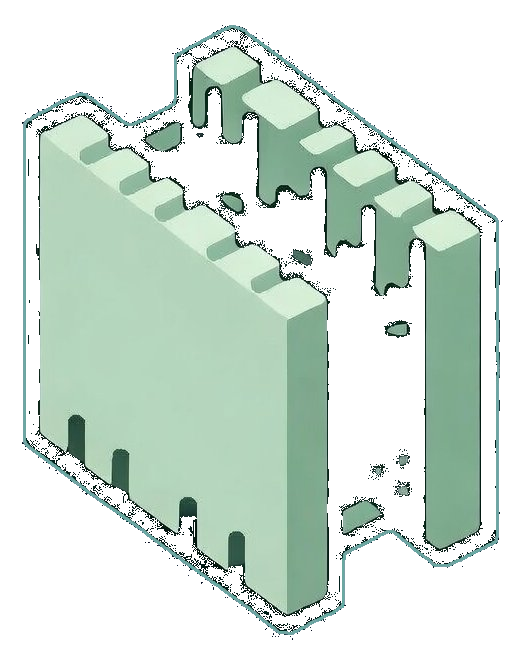

Texas faces hurricane threats from Brownsville to Beaumont, and severe storms can impact even inland communities like Austin and San Antonio. ICF construction provides unmatched protection against wind, debris, and flooding.
How ICF Survives Hurricanes
Wind Resistance: ICF walls have been tested to withstand winds exceeding 250 mph — far beyond any hurricane on record. The continuous concrete core, reinforced with steel rebar, creates a monolithic structure that doesn't have the weak points of wood framing.
Debris Impact: Flying debris is the leading cause of hurricane deaths and injuries. ICF walls can withstand impacts from 2x4 lumber traveling at 100+ mph — the standard missile test for hurricane resistance.
Flood Resistance: Unlike wood, concrete doesn't absorb water. ICF homes that experience flooding can be cleaned and reoccupied; the walls themselves remain structurally sound.
Real-World Performance
After Hurricane Harvey devastated the Texas coast in 2017, ICF homes were frequently the only structures left standing in heavily damaged neighborhoods. Insurance companies and FEMA have documented numerous cases of ICF homes surviving storms that destroyed surrounding wood-frame construction.
After Hurricane Michael (2018), ICF homes in Florida's panhandle remained standing when entire blocks of wood homes were reduced to debris.
Insurance Benefits
Insurance companies recognize ICF's superior storm resistance:
- Premium discounts of 15-25% for ICF construction
- Easier to insure in high-risk coastal areas
- Lower deductibles in many cases
- Faster claims processing (less damage = smaller claims)