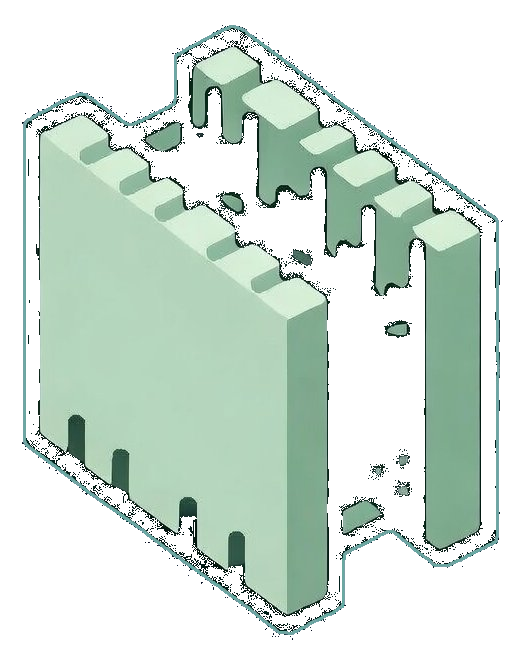
Why Texas Needs Fireproof Houses
Texas wildfire risk is increasing dramatically. The combination of drought conditions, urban-wildland interface expansion, and climate patterns means more homes face fire danger than ever before.
But here's the remarkable fact: after major wildfire events, investigators consistently find concrete and ICF homes standing while wood-frame neighbors are reduced to ash. The difference isn't luck—it's construction method.
Fire Ratings: What They Actually Mean
Fire ratings measure how long a building assembly can withstand fire exposure while maintaining structural integrity and preventing fire spread. The rating is determined by ASTM E119 testing in controlled laboratory conditions.
| Fire Rating | What It Means | Typical Use |
|---|---|---|
| 0 Hours | Combustible; no fire resistance | Standard wood frame |
| 1 Hour | Withstands fire for 1 hour | Fire-rated drywall assembly |
| 2 Hours | Withstands fire for 2 hours | Double-layer fire-rated drywall, CMU |
| 4 Hours | Withstands fire for 4 hours | ICF walls, thick concrete walls |
A 4-hour fire rating means that even with flames directly impinging on the wall, the structure maintains integrity for 4 full hours—enough time for fires to pass, firefighters to arrive, or weather to change. This is why ICF homes survive wildfires that destroy wood-frame construction.
Construction Materials: Fire Resistance Comparison
🔥 Wood Frame
Wood is combustible. Even with fire-treated lumber and drywall, wood-frame walls can be breached in 15-45 minutes. Embers entering through vents ignite interiors.
🧱 CMU Block
Concrete masonry provides good fire resistance, but hollow cores can allow fire spread. Must be filled with concrete for maximum rating.
🏗️ ICF Construction
Solid reinforced concrete core doesn't burn. EPS foam is self-extinguishing. The entire wall assembly achieves 4-hour rating.
How ICF Creates Fireproof Houses
The Concrete Core Won't Burn
The 6-12 inches of solid reinforced concrete at the heart of every ICF wall is completely non-combustible. Fire cannot penetrate it, period. While flames may char the exterior EPS foam, the structural wall remains intact.
Self-Extinguishing Foam
The EPS foam in ICF forms contains fire retardant additives that make it self-extinguishing. When the flame source is removed, the foam stops burning. It doesn't contribute fuel to an advancing fire.
No Cavities for Fire Spread
In wood-frame homes, fire can race through wall cavities, attic spaces, and floor assemblies—hidden from view and difficult to fight. ICF walls are solid. There's nowhere for fire to travel within the wall.
Real-World Survival Stories
During California's Paradise fire (2018), ICF homes stood while 14,000+ structures burned. In Texas's Smokehouse Creek fire (2024), ICF ranch buildings survived ember storms that destroyed wood construction. The pattern is consistent: concrete survives, wood doesn't.
Building a Fireproof House: Complete System
While ICF walls are the foundation of fire-resistant construction, a truly fireproof house requires attention to every component:
Walls: ICF (4-Hour Rating)
- 6" minimum concrete core
- Continuous from foundation to roof
- No combustible framing in exterior walls
Roof: Non-Combustible Materials
- Metal roofing (best option)
- Concrete or clay tiles
- Class A rated synthetic slate
- Avoid wood shakes/shingles entirely
Soffits & Vents: Ember-Resistant
- Fiber cement or metal soffits (never vinyl)
- 1/8" mesh over all vents to block embers
- Intumescent vent covers that close in heat
Windows & Doors
- Tempered or fire-rated glass
- Multi-pane windows with larger thermal mass
- Metal or fiberglass exterior doors
- Tight weatherstripping to block ember intrusion
Decks & Attachments
- Concrete, composite, or metal decking
- No wood fencing attached to structure
- Minimum 5-foot non-combustible zone around home
ICF vs "Fire-Rated" Wood Frame
Some builders claim wood-frame homes can be made "fire-resistant" with fire-rated drywall and assemblies. Here's the truth:
| Factor | ICF | "Fire-Rated" Wood Frame |
|---|---|---|
| Wall fire rating | 4 hours | 1-2 hours (best case) |
| Ember intrusion risk | Minimal—solid walls | High—many penetrations |
| Structural material | Non-combustible concrete | Combustible wood |
| Rating under real fire | Performs as rated | Often fails earlier than rated |
| Post-fire reuse | Structure often reusable | Total loss typical |
Lab Ratings vs. Real Fires
Laboratory fire ratings assume perfect construction and single-point ignition. Real wildfires attack from all directions with sustained heat and wind-driven embers. Wood-frame "fire-rated" assemblies frequently fail earlier than their ratings predict. ICF's margin of safety is much greater.
Insurance Benefits of Fireproof Construction
Insurance companies recognize that ICF homes present dramatically lower fire risk:
- Premium discounts: Many insurers offer 10-25% discounts for ICF construction
- Availability: ICF homes may be insurable in fire zones where wood-frame is declined
- Claims history: ICF homes have near-zero fire loss claims compared to wood
- Rebuild value: ICF survives fires that would total a wood home
In high-risk fire zones, the insurance savings alone can offset the modest premium for ICF construction within a few years.
Cost of Fireproof ICF Construction
ICF adds approximately 5-10% to construction costs compared to wood frame. For a $400,000 home, that's $20,000-$40,000. However:
- Insurance savings of 15-25% add up over time
- Energy savings of 50-70% reduce operating costs
- The home actually survives a fire instead of being a total loss
- Peace of mind for families in fire-prone areas
When you factor in the risk of losing everything in a fire, the premium for ICF construction is essentially fire insurance built into your walls—but unlike insurance, it actually prevents the loss.
Build Your Fireproof Home
Professional Building Supply provides Nudura ICF materials for fire-resistant construction throughout Texas. Free material takeoffs and contractor training available.
📞 Call 512-410-9692