📋 Table of Contents
What Does ICF Stand For?
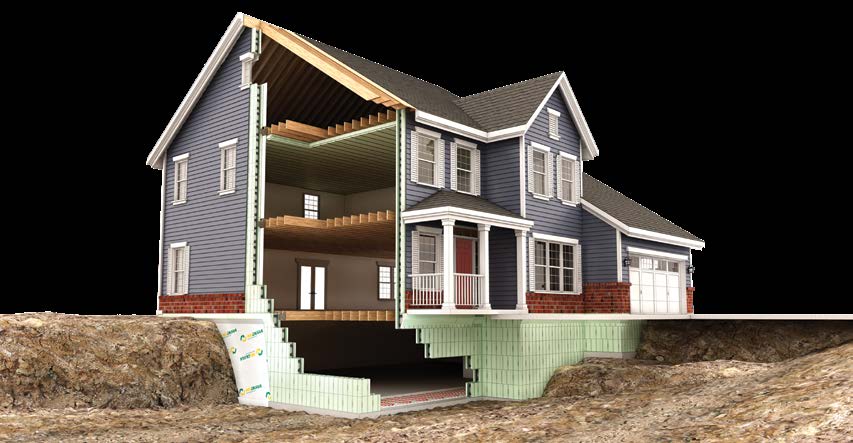
ICF stands for Insulated Concrete Forms — a modern building system that creates super-insulated, steel-reinforced concrete walls. Think of it as building with giant, interlocking foam blocks that get filled with concrete to create walls that are stronger, more energy-efficient, and more comfortable than traditional wood frame construction.
ICF construction has been used since the 1960s but has exploded in popularity over the past decade as energy costs rise and extreme weather events become more common. In Texas, ICF homes withstand hurricanes, tornadoes, wildfires, and extreme heat while cutting energy bills by 50-70%.
💡 Quick Definition
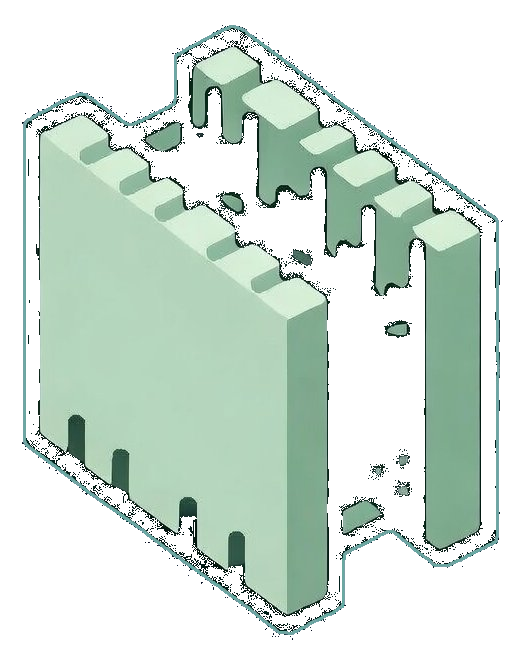
Insulated Concrete Forms (ICFs) are hollow foam blocks made of expanded polystyrene (EPS) that stack together like LEGO bricks. Steel rebar is placed inside, then concrete is poured to create a solid, insulated wall assembly. The foam stays in place permanently, providing continuous insulation on both sides of the concrete core.
How ICF Construction Works
ICF construction is surprisingly straightforward. Here's the step-by-step process:
Step 1: Foundation Preparation
ICF walls can start at the footing or on top of a traditional foundation. The first course is leveled carefully as it sets the template for all subsequent courses.
Step 2: Stacking the Forms
ICF blocks interlock with each other using built-in connection systems. Nudura's patented Duralok technology creates a secure connection without additional clips or ties. Workers stack the forms like building blocks, with each course offset for strength (similar to brick laying).
Step 3: Rebar Installation
Horizontal and vertical steel rebar is placed inside the forms according to engineering specifications. The rebar creates a steel-reinforced concrete structure that can withstand extreme forces.
Step 4: Bracing
Temporary bracing and alignment systems hold the forms plumb and straight during the concrete pour. This is critical for straight, true walls.
Step 5: Concrete Pour
Concrete is pumped into the forms in controlled lifts (usually 4 feet at a time). The concrete flows around the rebar and consolidates to eliminate voids. Vibration ensures proper consolidation.
Step 6: Finishing
Once cured, the foam exterior can accept any finish — stucco, brick, stone, siding, or drywall on the interior. The foam provides a perfect substrate for finishes and eliminates the need for additional insulation.
Benefits of ICF Construction
Energy Efficiency
ICF walls provide continuous insulation with no thermal bridging — a major weakness of wood frame construction where studs conduct heat through the wall. The concrete core also provides thermal mass, absorbing heat during the day and releasing it at night, which naturally moderates indoor temperatures.
Real-world data from Texas homeowners shows 50-70% reduction in heating and cooling costs compared to code-minimum wood frame homes. A Texas A&M University study found ICF homes required 44% less energy to cool and 58% less energy to heat than wood frame equivalents.
Disaster Resistance
ICF walls are steel-reinforced concrete — the same construction used for commercial buildings, hospitals, and schools. This makes them:
- Hurricane-proof: Withstands 200+ MPH winds and flying debris
- Tornado-resistant: FEMA-approved for safe room construction
- Fire-resistant: 4-hour fire rating (wood frame offers ~15-30 minutes)
- Flood-tolerant: Concrete doesn't rot, mold, or lose structural integrity when wet
Comfort & Quiet
ICF homes are dramatically quieter than wood frame. With STC (Sound Transmission Class) ratings of 50-55, ICF walls block 4-8 times more sound than typical wood frame walls. Traffic noise, neighbors, barking dogs, and storms stay outside where they belong.
The airtight construction also eliminates drafts. Blower door tests show ICF homes achieve less than 0.5 ACH (air changes per hour) compared to 3-6 ACH for typical wood frame homes.
Durability & Low Maintenance
Concrete doesn't rot, warp, or get eaten by termites. ICF homes have an expected lifespan of 100+ years with minimal maintenance. The EPS foam is treated with flame retardants and pest deterrents.
ICF vs. Wood Frame Construction
| Feature | ICF Construction | Wood Frame |
|---|---|---|
| Energy Efficiency | ✓ 50-70% savings, R-25 to R-48 walls | ✗ Thermal bridging at studs, R-13 typical |
| Fire Resistance | ✓ 4-hour fire rating | ✗ 15-30 minute rating |
| Wind Resistance | ✓ 200+ MPH, debris impact rated | ✗ ~100 MPH typical |
| Sound Blocking | ✓ STC 50-55 | ✗ STC 33-35 |
| Pest Resistance | ✓ Concrete doesn't attract termites | ✗ Requires ongoing treatment |
| Moisture/Mold | ✓ Inorganic materials, won't rot | ✗ Susceptible to rot, mold |
| Lifespan | ✓ 100+ years | ✗ 30-50 years typical |
| Initial Cost | 2-5% higher | Lower upfront |
| Total Cost of Ownership | ✓ Lower (energy + maintenance savings) | ✗ Higher long-term |
ICF Construction Cost
ICF construction typically costs 2-5% more than wood frame for the wall system alone. On a $400,000 home, this might represent $8,000-$20,000 additional cost.
However, the total cost picture is more favorable when you factor in:
- Smaller HVAC systems: The tight envelope allows downsizing equipment by 30-50%
- Insurance savings: Many insurers offer 10-25% discounts for ICF construction
- Energy savings: 50-70% lower utility bills, every month, forever
- Maintenance savings: No termite treatments, less exterior maintenance
- Resale value: ICF homes command premium prices and sell faster
💰 Cost-Benefit Example
A Central Texas homeowner spending $400/month on electricity in a wood frame home might spend $150/month in an equivalent ICF home — a savings of $250/month or $3,000/year. Over 10 years, that's $30,000 in savings, far exceeding the additional construction cost.
ICF Applications
ICF construction is versatile and suitable for virtually any building type:
Residential
- Custom homes (any architectural style)
- ICF basements and foundations
- Safe rooms and storm shelters
- Multi-family housing
Commercial
- Schools and universities (over 500 Net-Zero schools built with ICF)
- Healthcare facilities
- Hotels and hospitality
- Retail and office buildings
- Warehouses and industrial
Specialty
- Swimming pools and spas
- Retaining walls
- Agricultural buildings
- Theater and auditorium (excellent acoustics)
Frequently Asked Questions
What does ICF stand for in construction?
ICF stands for Insulated Concrete Forms — hollow foam blocks that stack together and are filled with reinforced concrete to create strong, energy-efficient walls.
How long do ICF homes last?
ICF homes have an expected lifespan of 100+ years. The concrete core is extremely durable, and the EPS foam insulation maintains its R-value indefinitely. Many ICF buildings from the 1970s are still in excellent condition.
Can any contractor build with ICF?
While ICF installation is straightforward, proper training ensures the best results. We offer free contractor training with qualifying orders. Experienced crews can stack and pour ICF walls faster than traditional concrete block.
Is ICF construction worth the extra cost?
For most homeowners, yes. The energy savings alone typically pay back the additional cost within 5-7 years. Add in insurance savings, lower maintenance, and increased comfort, and ICF is often the better long-term investment.
Where can I buy ICF blocks in Texas?
Professional Building Supply is Central Texas's authorized Nudura ICF distributor. We serve Austin, San Antonio, Houston, Dallas, and all of Texas with fast delivery, free training, and expert support. Call 512-410-9692 for pricing.