Texas has some of the highest cooling costs in the nation. With summer temperatures regularly exceeding 100°F, air conditioning can account for 50-70% of a home's energy use. ICF construction dramatically reduces this burden.
Why ICF Saves So Much Energy
Three factors combine to make ICF walls extremely energy efficient:
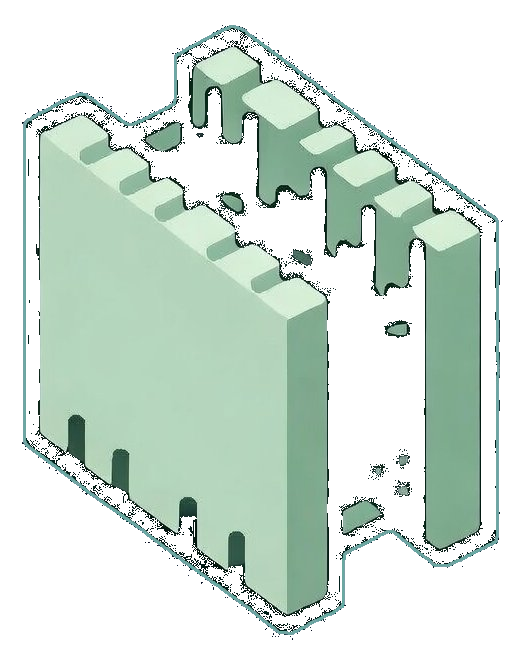
1. Continuous Insulation — No thermal bridging through studs. The foam completely envelopes the concrete, eliminating the heat transfer pathways that plague wood frame walls.
2. Thermal Mass — The concrete core stores temperature, smoothing out daily temperature swings. Your AC doesn't cycle as often, running more efficiently.
3. Air Tightness — ICF walls are inherently airtight. Blower door tests consistently show ICF homes achieving 1-2 ACH50, compared to 5-7 ACH50 for typical wood frame.
Real Utility Bills from Texas ICF Homes
Here's what actual ICF homeowners report:
- 3,200 sq ft home in Lakeway: August electric bill of $180 (neighbor with same sq ft wood frame home: $420)
- 2,800 sq ft home in Dripping Springs: Annual HVAC costs under $1,400
- 4,500 sq ft home in Hill Country: Total annual energy under $2,000 with solar (net-zero)
Smaller HVAC = More Savings
ICF homes require significantly smaller HVAC systems:
- A home that would need a 5-ton system in wood frame often needs only 2.5-3 tons with ICF
- Smaller equipment costs $3,000-$8,000 less upfront
- Smaller systems use less energy and last longer
Related Resources
ICF vs Wood Frame: True Cost Comparison
How Much Does an ICF Home Cost in Texas?
ICF Homes: Complete Guide
ICF Construction for Texas Weather