ICF Construction Explained
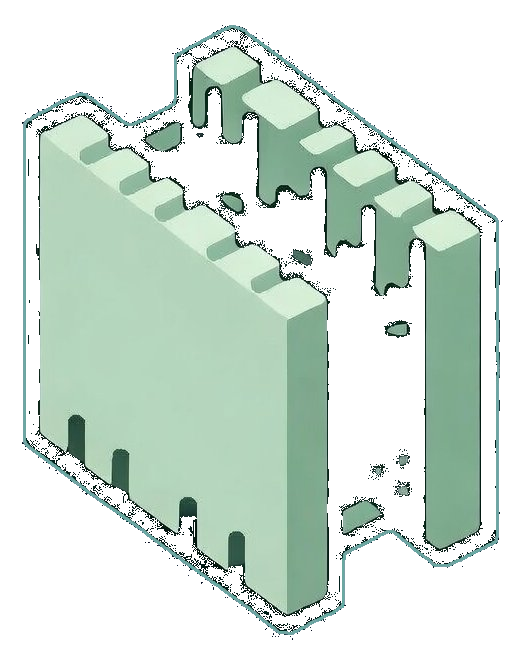
Insulated Concrete Forms (ICF) are hollow foam blocks that stack together like building blocks. Once stacked and braced, the forms are filled with reinforced concrete, creating solid walls with built-in insulation on both sides. The foam stays in place permanently, providing continuous insulation and a ready surface for finishes.
Unlike traditional construction where insulation is added between wall studs, ICF construction creates a monolithic concrete wall with zero thermal bridging. This simple difference results in dramatically better energy performance, superior strength, and longer building life.
ICF Wall Cross-Section
Total wall R-value: R-25 to R-48 depending on foam thickness
ICF Construction by the Numbers
How ICF Construction Works
The ICF construction process is straightforward and follows a logical sequence. Here's how a typical ICF project progresses:
Foundation Preparation
Concrete footings are poured with rebar dowels extending up where ICF walls will sit. The footing must be level within 1/4" for proper block alignment.
First Course & Rebar
The first row of ICF blocks is set on the footing, aligned, and braced. Horizontal and vertical rebar is placed according to engineering specifications (typically #4 or #5 rebar at 16" to 24" centers).
Stacking & Bracing
Additional courses are stacked, with blocks interlocking via built-in teeth or clips. Turnbuckle bracing keeps walls plumb during the pour. Window and door bucks are installed as walls rise.
Concrete Pour
Concrete (typically 3,000-4,000 PSI) is pumped into the forms in 4-foot lifts. Vibration consolidates the concrete around rebar. A 2,000 sq ft home uses approximately 25-35 cubic yards of concrete.
Finishing
After curing (typically 24-48 hours before removing bracing), the foam surface accepts any exterior finish: stucco, stone, siding, or brick. Interior walls can be finished with drywall attached directly to the embedded plastic strips.
ICF vs Traditional Construction
How does ICF construction compare to conventional wood frame and concrete block (CMU) building methods?
| Feature | ICF Construction | Wood Frame | CMU Block |
|---|---|---|---|
| Wall R-Value (Whole Wall) | R-25 to R-48 | R-13 to R-19* | R-5 to R-8 |
| Fire Rating | 4 Hours | 0-1 Hour | 2-4 Hours |
| Wind Resistance | 200+ MPH | 90-130 MPH | 150+ MPH |
| Sound Blocking (STC) | 50-55 | 33-35 | 45-50 |
| Thermal Bridging | ✓ None | ✗ Every Stud | ✗ Significant |
| Termite Resistant | ✓ Yes | ✗ No | ✓ Yes |
| Rot/Mold Resistant | ✓ Yes | ✗ No | ✓ Yes |
| Initial Cost | +3-5% vs wood | Baseline | +5-10% vs wood |
| Energy Cost (Annual) | 50-70% less | Baseline | 10-20% less |
*Wood frame R-value accounts for thermal bridging at studs, which reduces effective insulation by 20-30%.
ICF Construction Costs in Texas
ICF construction typically adds 3-8% to the initial building cost compared to wood frame. However, this premium is often offset by reduced HVAC sizing, lower energy bills, and insurance discounts.
Sample Cost Comparison: 2,500 sq ft Home
Typical payback period: 4-6 years through energy savings alone.
For detailed pricing, see our ICF Material Calculator or 2026 ICF Price Guide.
Common Questions About ICF Construction
What does ICF stand for in construction?
ICF stands for Insulated Concrete Forms. These are hollow foam blocks that stack together like LEGO bricks, then get filled with reinforced concrete to create solid, insulated walls. The foam stays in place permanently as the insulation layer.
Is ICF construction better than wood frame?
ICF construction offers significant advantages for most applications: 50-70% energy savings, 4-hour fire rating, 200+ MPH wind resistance, STC 50+ sound reduction, and walls that won't rot, burn, or attract termites. The higher upfront cost is typically offset by lower operating costs within 5-7 years.
How long does it take to build an ICF home?
ICF wall construction is comparable to or faster than traditional methods. An experienced crew can stack and pour ICF walls for a typical 2,500 sq ft home in 2-3 weeks. The overall construction timeline is similar to conventional building since most time is spent on interior finishes.
Can I get insurance discounts for ICF construction?
Yes. Many insurance companies offer discounts of 10-25% for ICF homes due to their fire resistance, wind resistance, and reduced claims history. Additionally, ICF homes in high-wind zones may qualify for lower rates since they exceed most building codes.
Is ICF construction approved by building codes?
ICF construction is recognized by all major building codes including the International Residential Code (IRC), International Building Code (IBC), and all Texas municipal codes. Most ICF manufacturers provide engineering tables and prescriptive designs that satisfy code requirements.
What finishes can I use on ICF walls?
ICF walls accept virtually any finish: stucco, synthetic stone, natural stone, brick veneer, fiber cement siding, wood siding, and more. Interior walls can be finished with drywall attached to embedded plastic strips or furring. The foam surface provides a flat, consistent substrate for all finishes.
Ready to Learn More About ICF Construction?
Professional Building Supply offers free ICF contractor training and material takeoffs for your project. Call us to discuss your ICF construction plans.
📞 Call 512-410-9692